
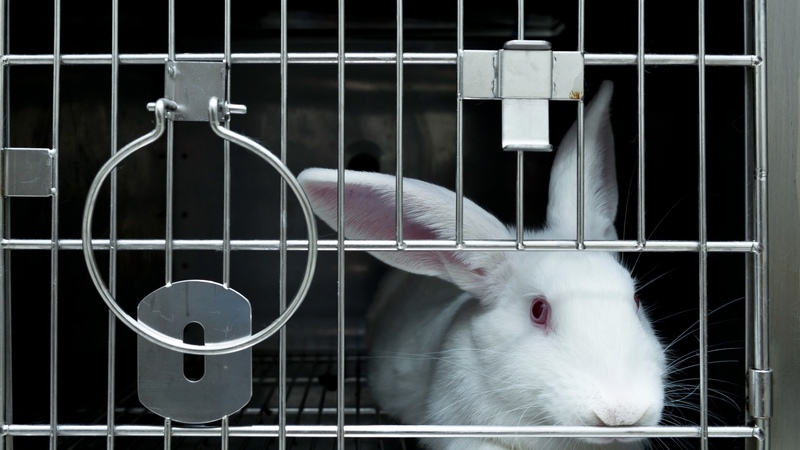
The United Kingdom has taken an unprecedented step in animal protection by presenting the world's first comprehensive national strategy to progressively phase out the use of animals in scientific research and laboratory testing. The plan, titled "Replacing animals in science: a strategy to support the development, validation and uptake of alternative methods", was presented on November 11th by the British Minister for Science, Lord Patrick Vallance, and marks a turning point towards more ethical, reliable scientific methods in line with the technological advances of the 21st century.
"This strategy represents a historic advance for animals and for science. For decades, millions of sentient beings have suffered and died in laboratories under the promise that there were no alternatives. Today, the United Kingdom demonstrates that this narrative is obsolete and that it is possible to bet on innovative, rigorous, and cruelty-free research," states Aïda Gascón, director of AnimaNaturalis in Spain. "This commitment should inspire other countries, including our own, to follow this path," she adds.
Concrete Deadlines and Binding Commitments
What distinguishes this strategy from previous declarations is the inclusion of specific dates and measurable objectives. The British government commits to eliminating certain types of animal experimentation within established deadlines, representing a radical change from traditional policies that lacked defined timelines.
Among the most notable commitments are:
By the end of 2026: Tests on animals for assessing eye and skin irritation, as well as dermal sensitization, will be banned. These experiments, currently performed mainly on rabbits, have been criticized for years by animal protection organizations due to the intense suffering they cause. Tests for pyrogens on rabbits will also be eliminated, to be replaced by analyses using human immune cells in the laboratory.
By 2027: It is expected that botox potency tests on mice will end, a procedure that involves injecting the animals with a lethal neurotoxin. These will only be maintained in exceptional medical cases. Furthermore, all analyses for detecting adventitious agents —viruses or bacteria that could accidentally contaminate medicines— will be conducted exclusively using DNA-based methods, without resorting to animals.
By 2030: The government commits to reducing pharmacokinetic studies in dogs and non-human primates by at least 35%. These experiments, which track how a medicine moves through an organism over time, have been especially controversial for using species with high cognitive and emotional capacity. The use of animals in antibody production using traditional methods, which involve repeated injections and invasive extraction of blood or fluids, will also be eliminated.
Future Technologies: Beyond the Animal Model
The heart of the British strategy lies in the development and validation of alternative methods that are already proving to be more precise, economical, and relevant to human health than traditional animal models. The government will allocate 60 million pounds to create a specialized data, technology, and knowledge center that fosters collaboration between researchers, and a UK Centre for the Validation of Alternative Methods (UKCVAM) that will expedite the regulatory approval of these new techniques.
Furthermore, the Medical Research Council, Innovate UK, and the Wellcome Trust have jointly committed 15.9 million pounds to drive in vitro human models, including innovative systems that are already transforming biomedical research.
Among the priority technologies are:
Organ-on-a-chip systems: These are tiny devices that use real human cells to replicate the functioning of organs like the liver, brain, lungs, or heart. These chips allow observation of how human cells respond to medicines or chemical substances under conditions that faithfully mimic the physiological environment of the human body. Five research teams in the UK will work on models for liver diseases, brain diseases, cancer, pain, and blood vessels.
3D bioprinted tissues: This technology allows the creation of realistic human tissue samples —from skin to liver— to assess substance toxicity without the need for animals. Bioprinted tissues offer more faithful environments for studying human biology than animal models, whose results are often not applicable to humans.
Artificial intelligence and computational modeling: The expanded use of AI will allow analysis of enormous amounts of molecular information to predict whether a new drug will be safe and effective in humans, shortening research times and drastically reducing the number of animals used.
A Problem of Scientific Relevance, Not Just Ethical
Although the ethical impetus is undeniable, the British strategy also responds to a growing awareness of the scientific limitations of animal models. Numerous studies have shown that less than 10% of promising discoveries in basic research —mostly based on experiments with animals— end up being applied in human clinical practice within a 20-year period.
A paradigmatic example is sepsis, a condition causing approximately 48,000 deaths annually in the United Kingdom. Despite decades of research and billions of pounds invested in experiments with mice and rats, there are no specific treatments or reliable diagnostic tools for humans. The reason is clear: rodent biology differs substantially from ours. The result has been hundreds of "cures" for sepsis in mice that never worked in people.
"For too long, animal experimentation has delivered much suffering and very little real progress for human health. Biological differences between species often make the results inapplicable, delaying genuine medical advances," states Gascón. "Methods like organoids, organ chips, and computational models are already surpassing animal tests in many contexts. It is time to invest decisively in these technologies," she adds.
A Growing Global Trend
The United Kingdom is not alone on this path. Canada, the United States, and the European Union have also taken steps to reduce animal experimentation and invest in so-called "New Approach Methodologies" (NAMs). The harmonization of international standards, coordination between governments, and joint funding will be essential to ensure an effective and efficient global transition.
In the United Kingdom, the use of animals in experiments peaked in 2015 with 4.14 million procedures, driven mainly by the rise in genetic modification experiments on mice and fish. By 2020, that figure had dropped drastically to 2.88 million thanks to the development of alternative methods. However, since then the decline has stalled, currently sitting at around 2.5 million procedures annually. The new strategy seeks precisely to reactivate that downward trend.
The strategy has been received with cautious optimism by animal protection organizations and scientists committed to alternatives. Barney Reed, Head of Science and Policy at the RSPCA, stated that "this strategy marks a significant step forward towards ending the use of animals in science" and highlighted that 77% of British adults support the government's commitment to phase out animal experimentation.
"We celebrate and applaud this advance by the United Kingdom, which demonstrates that political commitment can drive a profound transformation in science and real change for animals," concludes Gascón. "Now it is the responsibility of other countries, including Spain, to follow this example. The science of the 21st century cannot continue to be based on 19th-century practices. Animals, ethics, and scientific efficacy itself demand it."
The strategy will be overseen by a committee chaired by Lord Vallance that will include other ministers, government departments, regulators, and funders. Key performance indicators will be published in 2026 to monitor progress.
With this initiative, the United Kingdom not only responds to a growing social demand but also positions itself as a global leader in regulating alternative methods and developing a science that is more humane, precise, and relevant to human health. The path towards research completely free of animals will be long, but this plan marks the beginning of an era in which the suffering of millions of sentient beings in laboratories could, finally, come to an end.

