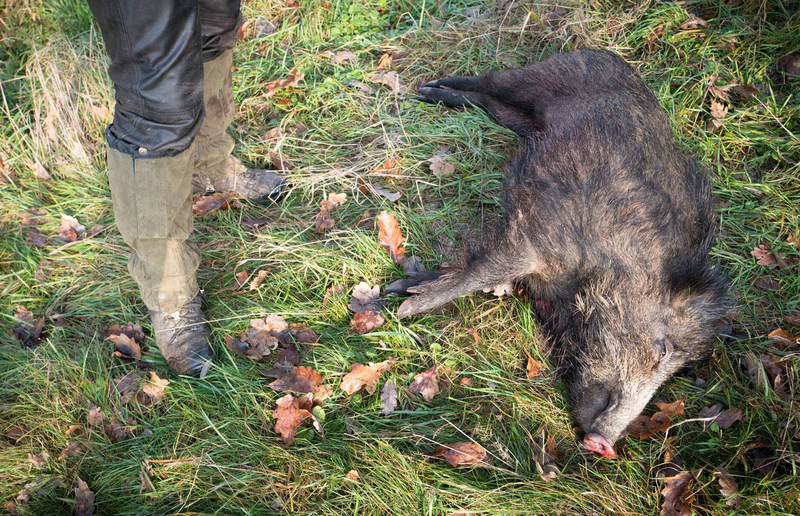
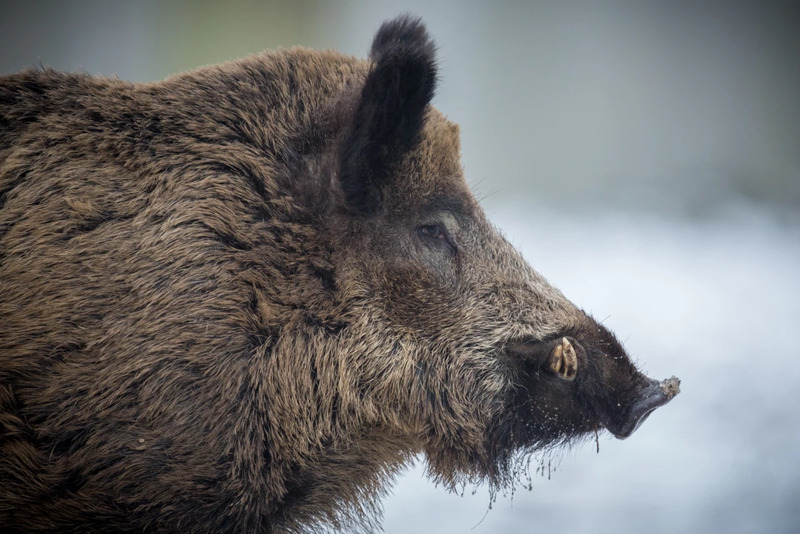
On November 28, 2025, Spain confirmed something that had not happened since 1994: the detection of African Swine Fever (ASF) on its territory. Two dead wild boars in Bellaterra, in the province of Barcelona, tested positive for the virus, triggering an unprecedented government response that includes the planned culling of tens of thousands of wild animals and the mobilization of over 70 million euros in public funds.
But while regional administrations compete to offer the highest prices for each boar killed —40 euros in Valencia, 30 euros in Aragón, between 18 and 30 euros in Catalonia— critical voices from the scientific, environmental, and animal defense fields question both the effectiveness of these measures and the real destination of public money, and above all, who the true beneficiaries of this health crisis are. This again demonstrates a dangerous tendency: responding to complex problems with simplistic solutions based on the shotgun.
"We are witnessing a disproportionate response that turns wild boars into scapegoats for a problem created by the intensive livestock industry itself," states Aïda Gascón, director of AnimaNaturalis in Spain. "Tens of millions of euros are being invested in killing wild animals to protect a factory farming model that is precisely what generates these recurring health crises."
The Outbreak: A lethal disease for pigs, harmless for humans
It is crucial to clarify that African Swine Fever is not "swine flu." It is a highly contagious and lethal viral hemorrhagic fever for domestic pigs and wild boars, with mortality rates close to 100%, but it poses no health risk to humans, either through direct contact or consumption of derived products.
The virus, caused by a member of the Asfarviridae family, has exceptional resilience: it can survive in carcasses for months, especially in cool climates. Since the confirmation of the first case in Bellaterra, the outbreak has expanded rapidly. By mid-December, the Ministry of Agriculture had verified at least 26 infected wild boars in the Collserola area and metropolitan areas of Barcelona.
The origin of the African swine fever (ASF) outbreak detected in wild boars in Catalonia is under judicial and technical investigation, focused on determining if it could have occurred due to an accidental leak from a specialized laboratory. The main suspect center is the IRTA-CReSA (Animal Health Research Center) in Bellaterra, a reference in the study of this disease, due to its geographical proximity to the first infected animal carcasses. A court in Cerdanyola del Vallès has ordered a joint police search by the Mossos d'Esquadra and the Guardia Civil in its facilities to collect virus samples, seize documentation and electronic equipment, and inspect security and waste management protocols. The objective is to compare the outbreak strain with those used in the center and clarify whether there was negligence, a failure in biological containment, or an intentional act.
The response has been forceful: a 6-kilometer cordon around the initial outbreak, closure of natural parks, deployment of the Military Emergency Unit (UME), Mossos d'Esquadra, and Rural Agents for active search of carcasses, and the activation of emergency hunting plans in practically all of Spain.
Killing Tens of Thousands of Wild Boars
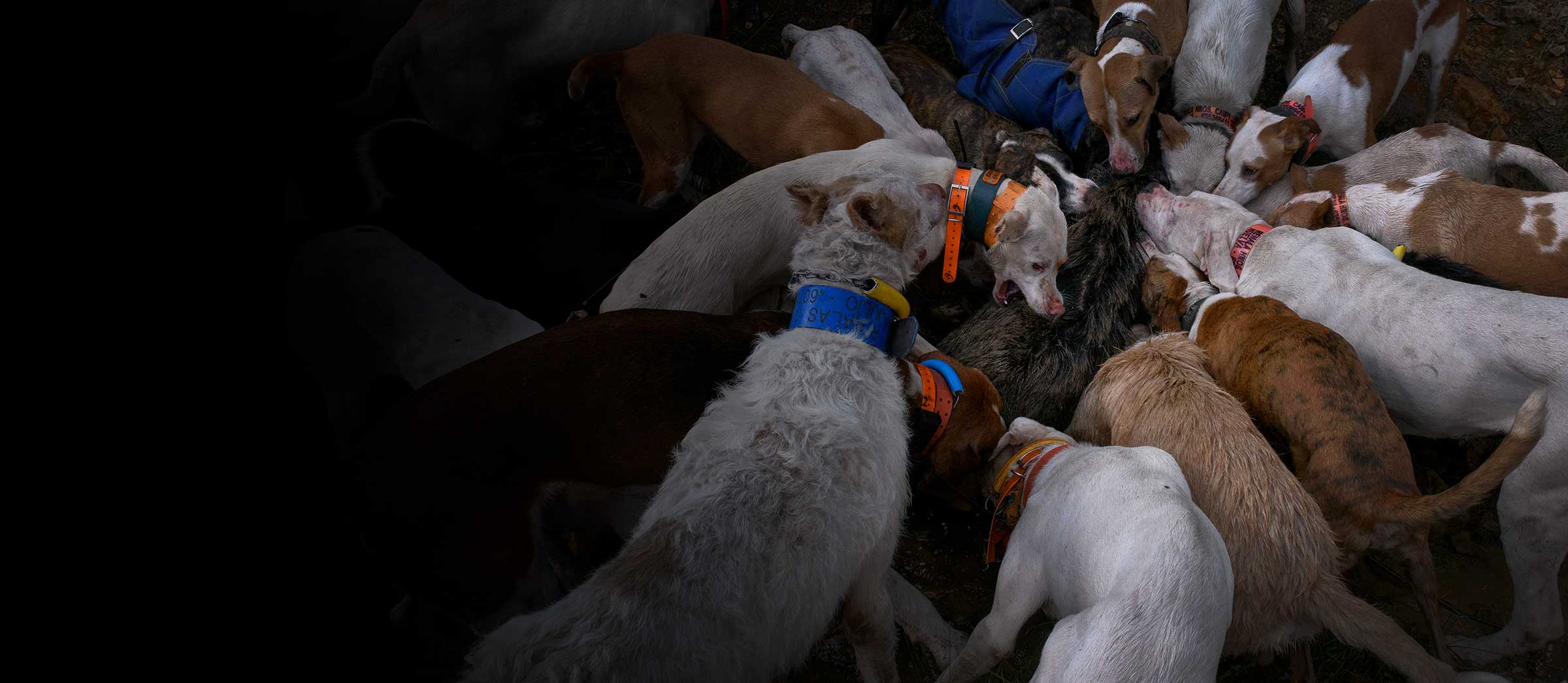
Catalonia, the epicenter of the outbreak, has announced its intention to halve its wild boar population: from 125,000 specimens to approximately 60,000. To achieve this, the Generalitat offers economic aid to hunters of between 18 and 30 euros for each animal killed, has eliminated hunting quotas, and has authorized special methods like night-time thermal scopes.
But the strategy is not limited to Catalonia. Aragón, Spain's main pig-producing region and bordering the affected area, declared a preventive hunting emergency and approved paying 30 euros for each hunted boar, plus authorizing unlimited hunting 365 days a year. The Valencian Community launched a 6-million-euro plan that includes 40 euros per specimen killed. Extremadura and Castilla y León have implemented similar measures.
The official justification is clear: wild boars are a wild reservoir for ASF and their high mobility can spread the virus to domestic pig farms. If this happens, affected farms must be entirely culled.
By breaking the social structure of wild boar groups, their movements and stress are increased, which favors the dispersion of the virus. Furthermore, the pathogen can remain active for months in carcasses and remains, so killing animals without guaranteeing rigorous monitoring and removal protocols does not solve the health problem.
The solution is not in shooting, but in reinforcing biosecurity on farms, improving controls and traceability, and applying solid epidemiological measures. Major documented outbreaks have originated from human failures and deficient farming practices, not from wild boar density.
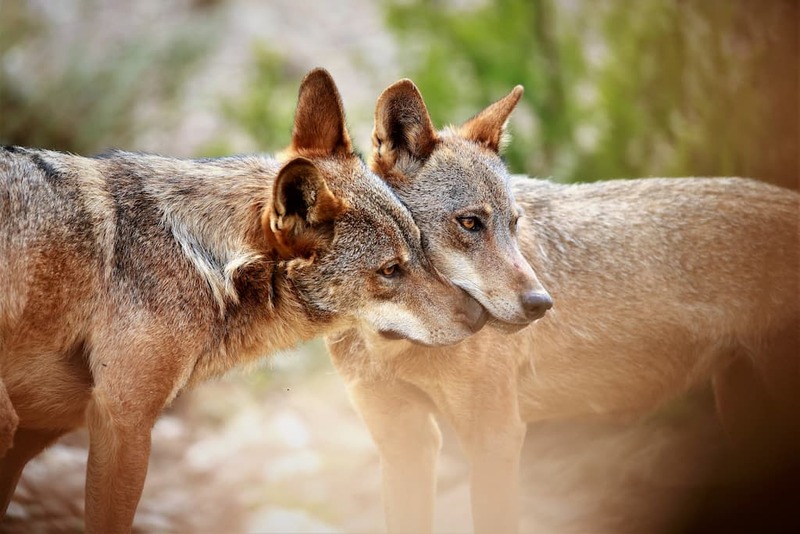
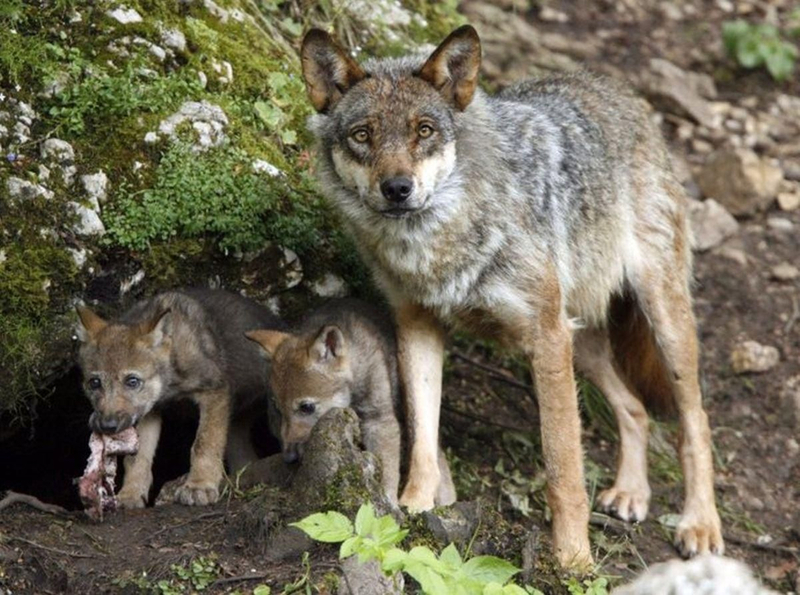
Another aspect ignored by the authorities is the function of natural predators, especially the wolf, whose regulatory role over ungulates is widely recognized. Its persecution reduces an ecological mechanism that contributes to maintaining more stable and healthy populations. Diminishing its presence implies, in the medium term, favoring the increase of wild boar and perpetuating the very conflict it claims to combat.
The Economic Argument
The figures are staggering. Spain exported 8.783 billion euros in pork meat in 2024, of which approximately 1.1 billion corresponded to China. With international bans activated, the sector calculates that up to 2.6 billion euros of global business are at risk. "What we are seeing is how everyone's taxpayer money is used to safeguard the profits of an industry that keeps 38 million pigs in overcrowded conditions," denounces Gascón. "It's presented as a health crisis, but it's actually a crisis of the intensive agro-industrial model that prioritizes economic profit over animal welfare and ecosystem health."
Thanks to diplomatic efforts and the speed of control measures —including mass killings as a demonstration of action— China accepted the principle of "regionalization," allowing the rest of Spain to continue exporting while the virus remains confined to Barcelona. However, this agreement is extremely fragile: a single infected boar detected in areas of high farm density like Lleida or Aragón could extend the ban to the entire country.
Subsidies and Rewards for Captures
The ASF containment strategy has transformed hunting from a recreational pastime into a state-subsidized environmental management service. To incentivize the drastic reduction of wild boar populations, various autonomous communities have allocated public treasury budgets to pay directly for each specimen killed.
The administrations have set different "prices" for each boar removed from the natural environment, depending on the area's health urgency:
- Aragón: The regional government has approved a decree law establishing a payment of 30 euros per boar hunted. This measure is part of an extraordinary budget to protect its powerful pork industry from the virus's advance from Catalonia.
- Valencian Community: Through Order 4/2025, a budget of 900,000 euros has been allocated for species control. In this region, hunting ground managers receive 40 euros for each boar killed and removed.
- Catalonia: The Generalitat has mobilized approximately 1.45 million euros in 2025 to encourage captures. The payment system is variable, ranging from 5 to 25 euros per specimen depending on the area and the capture method used.
Who are the final beneficiaries of these funds? The trail of public money diversifies among several key actors in the rural world and health management:
- Hunters' societies and local clubs: They are the direct recipients of most aid per animal taken. In Catalonia, hunters' societies directly receive over 600,000 euros to cover battue expenses (dogs, ammunition, insurance, transport). According to hunting federations, these funds are distributed among clubs to cover the "logistical costs" of battues, costs previously borne by hunters out of their own pockets. Hunting federations, traditionally recreational entities, have become logistical partners of the administration.
- Meat industry companies: In regions like Catalonia, a specific subsidy line of 12.5 euros per carcass has been established for companies that commercialize game meat. The goal is to incentivize these companies to accept and process the killed specimens, integrating them into the food value chain as long as they test negative for ASF.
- Local administrations (town councils): Part of the budget, especially in the Valencian Community, is transferred to town councils of municipalities with boar overabundance to fund the installation of sealed containers and the adaptation of facilities for carcass disposal.
- Public management companies: In cases where recreational hunting is insufficient or prohibited, such as in national parks, public money flows to entities like TRAGSA (at the national level) and SARGA in Aragón. In Extremadura, spending of 347,305 euros has been authorized for TRAGSA to carry out culling and population control in Monfragüe National Park.
- SANDACH waste managers: Private companies specializing in animal by-products not intended for human consumption, like GIRE S.A. in Catalonia or the public VAERSA in Valencia, manage emergency contracts that can exceed 786,000 euros for the removal, transport, and incineration of carcasses.
- Pork sector: The Generalitat of Catalonia approved a direct aid package of 10 million euros (expandable to 20 million) to compensate the pork sector, plus subsidies to reinforce farm biosecurity. In Valencia, aid for farm biosecurity was increased from 4.2 to 9 million euros.
"We are seeing how the killing of wild animals is turned into a business subsidized with everyone's taxpayer money," denounces Gascón. "Hunting federations receive public funds to perform what they present as a 'service to the community,' when in reality they are being paid to do what they traditionally did as a hobby. Meanwhile, factory farms —which are the true source of sanitary risk— also receive millions in aid to reinforce a biosecurity that should have been mandatory from the start."
Hunting May Worsen the Problem
One of the most controversial aspects of the government response is that the scientific community itself questions the effectiveness of mass culling. The European Food Safety Authority (EFSA) has warned that intensive and disorganized hunting can be counterproductive during an active outbreak.
The phenomenon is known as the "dispersion effect": the noise of gunshots and the presence of dogs in the woods disrupt the social groups of wild boars, causing surviving individuals —potentially infected— to flee to uncontaminated areas, carrying the virus with them. Studies carried out in Italy during previous outbreaks confirmed this dynamic.
Ecologists in Action and other environmental organizations have rejected what they call the "criminalization" of wild boars, pointing out that these animals are victims of an inadequate territorial management model that includes the abandonment of agricultural land, the proliferation of industrial crops that serve as their food, and crucially, the absence of natural predators like the wolf.
"Wild boars haven't multiplied by spontaneous generation," underscores Gascón. "Their overpopulation is a direct consequence of decades of poor environmental management, ecosystem destruction, and elimination of predators. Now they intend to solve with a massacre what is a systemic problem requiring comprehensive solutions."
Non-Lethal Alternatives
What is most frustrating for animal defense organizations is that validated scientific alternatives exist that are being ignored or underfunded in favor of killings.
- Oral vaccines: In 2019, a study conducted in Spain demonstrated the efficacy of an experimental oral vaccine against ASF. Administered to wild boars, the vaccine protected 92% of the animals against the virus. This oral attenuated vaccine, which would be the first against ASF genotype II tested in wild boars, could immunize part of the wildlife, reducing the number of susceptible animals and decreasing the incidence of the disease.
- Fertility control: The Autonomous University of Barcelona (UAB) is developing a pilot project with contraceptive vaccines for wild boars based on the GnRH hormone. Studies show that a single injection can inhibit reproduction for 2 to 6 years. With a current cost of 35 euros per vaccine, this method could stabilize populations without killing animals and with long-term costs lower than continuous battues.
- Waste management and biosecurity: Since the virus is primarily transmitted by contaminated food objects, improving organic waste management and reinforcing farm biosecurity through secure fencing, footbaths, and access controls are fundamental measures that should be prioritized over hunting.
- Electric fencing and selective trapping: Methods that do not disperse the population and allow for controlled extraction without causing the panic that triggers uncontrolled migrations.
"We have scientific, ethical, and effective solutions, but they opt for the politically quickest one: killing animals and distributing public money," criticizes Gascón. "The oral vaccine demonstrated 92% efficacy in 2019. Why hasn't it been invested in commercially? Why isn't wildlife contraception adequately funded? The answer is clear: because it doesn't benefit the same sectors that are now receiving millions in subsidies."
The Ethical Debate: Victims or Culprits?
The Center for Animal Ethics of Pompeu Fabra University (UPF-CAE) has issued a report indicating that wild boars are "victims and not culprits" of a disease spread by the globalized food model. According to this research center, the culling of wild boars is used as a protection mechanism for a meat industry that keeps 38 million pigs in overcrowded conditions.
The wild boar population in Spain has grown by 550% in the last thirty years, reaching approximately 1.3 million specimens. This exponential growth responds to factors such as land use changes, food availability in peri-urban areas, hybridization with domestic pigs, and crucially, the absence of natural predators.
"When we eliminate the wolf and alter ecosystems, when we fill the territory with factory farms that pollute and generate imbalances, when we abandon the traditional rural environment... then we can't be surprised when problems appear," reflects Gascón. "But instead of correcting those root causes, they opt for the shortest route: blaming wild animals and eliminating them."
Spain's intensive livestock model currently keeps about 38 million pigs on farms, many of them in high-density conditions that make them potential hotspots for diseases. Critics point out there is an excess of pigs in factory farms —much more contagious among themselves than dispersed wild boars— and a lack of regulation of the agro-industrial model.
A Crisis Revealing Deep Contradictions
The African Swine Fever crisis in Spain in 2025 is revealing deep contradictions in the environmental and agro-industrial management model. On one hand, extraordinary public resources are mobilized to protect the interests of an industry that generates significant private profits. On the other, validated scientific solutions are ignored in favor of measures that may prove counterproductive.
The commercial regionalization achieved with China is, at best, a temporary patch. If the virus expands —and uncontrolled hunting may facilitate that expansion— the economic consequences will be devastating. But beyond commercial figures, this crisis raises fundamental ethical questions about our relationship with animals, both domestic and wild, and about the sustainability of a production model based on intensification and overcrowding.
"This crisis won't be solved just by hunting wild boars," concludes Gascón. "We need a profound transformation of the livestock model, reducing animal concentration, improving real biosecurity, restoring functional ecosystems with their natural predators, and investing in scientific solutions like vaccines and fertility control. What we cannot continue doing is using everyone's money to perpetuate an unsustainable system at the expense of massacring native wildlife."
The intensive livestock industry and administrations are building a narrative that blames wild boars for a crisis that has much deeper causes. It is crucial that the public knows all the information: who receives public money, what alternatives exist and why they aren't being implemented, and what the true environmental and ethical cost of the decisions being made is.
Share this article on your social media. Information is the first step to demanding more ethical, scientific, and sustainable policies.